By Abid Farooqui, President and Founder, SilverLight Aviation. Abid has over 20 years of experience flying, designing, manufacturing, and supporting light sport aircraft. He has led FAA compliance processes and ASTM audits for multiple aircraft manufacturers, including Progressive Aerodyne, American Legend Cub, Evolution Trikes, Skyrunner, and Texas Aircraft Colt, and has worked directly with the FAA on the details of the MOSAIC rule. | Reviewed by Stacey Farooqui, MBA, Technical Writer and Content Strategist. Stacey has written technical documentation for aircraft and brings over a decade of aviation industry marketing experience.
If you have been looking into learning to fly or buying your first aircraft, you have probably come across the term “light sport aircraft” more times than you can count. And if you looked it up recently, you may have found conflicting information. That is because the rules just changed in a big way.
In July 2025, the FAA finalized the Modernization of Special Airworthiness Certification (MOSAIC) rule. It is the most significant overhaul of recreational aviation regulations in more than two decades. The term “light sport aircraft” is being phased out. The category is being redesigned from the ground up. And for sport pilots, the options for what you can fly have expanded dramatically.
This article breaks down what light sport aircraft has meant historically, what it means now, and what the changes mean for you as a pilot or prospective aircraft buyer.
Understanding Light Sport Aircraft: The Basics
A Light Sport Aircraft is a category created by the FAA in 2004 to make flying more accessible and affordable. The original intent was straightforward: provide a regulatory framework for smaller, simpler aircraft that could be flown with less training and without the medical certification requirements of a traditional private pilot license.
The FAA was responding to a real gap in aviation regulations. Many recreational pilots wanted to fly aircraft that were more capable than ultralights but did not need the complexity and expense of traditionally certified aircraft. The Light Sport Aircraft category filled that need, and all aircraft certified under it were required to comply with ASTM consensus standards from the start.
Light Sport Aircraft include more than just airplanes. The FAA’s 2004 rule named several aircraft types in the LSA definition: airplanes, gliders, powered parachutes, weight-shift-control aircraft (trikes), balloons, and airships. When most people discuss LSAs, they are referring to light sport airplanes, the fixed-wing aircraft that became the most common for flight training and recreational flying.
Gyroplanes are a separate and important note. While sport pilots could fly gyroplanes built as Experimental Amateur-Built aircraft, there was no pathway to certify a factory-built gyroplane as a Special Light Sport Aircraft under the original rules. That exclusion appears to have been an oversight in the 2004 rulemaking. MOSAIC corrects it, creating the first regulatory pathway for production gyroplanes under the new light-sport category rules.
The Original Light Sport Aircraft Category (2004)
Under the 2004 rules, a light sport airplane had to meet all of the following criteria:
- Maximum gross takeoff weight of 1,320 pounds for land planes (1,430 pounds for seaplanes)
- Maximum level flight speed of 120 knots calibrated airspeed
- Maximum stall speed of 45 knots calibrated airspeed
- No more than two seats
- Single reciprocating engine only
- Fixed landing gear and fixed-pitch or ground-adjustable propeller only
Critically, these aircraft were also required to comply with ASTM consensus standards, which set design, production, and safety requirements for the light-sport category. This is an important detail that often gets overlooked: ASTM compliance has always been central to what makes an aircraft a light sport aircraft, not just weight and speed.
An Important Distinction: Light Sport Aircraft vs. Type-Certificated Aircraft
This is where a lot of people get confused, and it is worth being very clear about.
A light sport aircraft is NOT the same as a type-certificated aircraft that happens to be small and slow.
Many vintage and legacy airplanes were designed and certified decades before the light sport category existed. They went through the FAA’s standard airworthiness process and hold type certificates. They are not light sport aircraft, and they never were.
Under MOSAIC, a sport pilot may be able to fly certain type-certificated airplanes that meet the new stall speed performance standards. But the airplane does not become a light sport aircraft because a sport pilot is flying it. It keeps its type certificate and remains under entirely different maintenance, airworthiness, and modification rules.
These are two separate regulatory frameworks. Knowing which one your aircraft lives in determines who can maintain it, what modifications are permitted, and what airworthiness documentation you need.
The MOSAIC Rule: How Light Sport Aircraft Changed in 2025 and 2026
In July 2025, the Federal Aviation Administration (FAA) announced a transformative update to Light Sport Aircraft regulations through the Modernization of Special Airworthiness Certification (MOSAIC) rule. This represents the most significant change to recreational aviation regulations in over two decades.
The FAA recognized that the original 2004 rules, while successful, had become outdated. Technology had advanced significantly, and aircraft designs had evolved. Safety data showed that Light Sport Aircraft had an excellent track record, on par with GA Type Certificated airplanes. Meanwhile, the industry and pilots had been advocating for modernization that would expand capabilities and aircraft types while maintaining the accessibility that made LSAs attractive in the first place.
MOSAIC fundamentally reimagines what a light-sport category aircraft can be, separating aircraft certification standards from pilot privilege requirements. This distinction is crucial because it allows for more capable aircraft while still maintaining appropriate limitations for pilots operating under sport pilot privileges.
Implementation rolled out in two phases:
- Phase 1 (October 22, 2025): Expanded sport pilot privileges took effect. Sport pilots gained access to a much wider range of aircraft based on new performance standards. Read AOPA’s MOSAIC FAQ for full details.
- Phase 2 (July 24, 2026): New light-sport category aircraft certification standards take effect under the new Part 22. The “light sport aircraft” definition is removed from 14 CFR 1.1 and replaced with “light-sport category aircraft.”
What Defines a Light-Sport Category Aircraft Today
As of October 22, 2025, the definition of what aircraft sport pilots can fly has expanded dramatically. As of July 24, 2026, new aircraft can be certified under the expanded light-sport category rules.

MOSAIC Changes for Airplanes Only
- No more weight limits for airplanes. The 1,320-pound maximum takeoff weight restriction has been eliminated, but for airplanes only. Instead, airplanes are now limited by performance characteristics, specifically stall speed.
- Higher speed capabilities. Aircraft can now have a maximum level flight speed of 250 knots calibrated airspeed (about 288 mph), a significant increase from the previous 120-knot limit.
- Stall speed requirements. For sport pilots, the maximum clean stall speed (VS1) is 59 knots calibrated airspeed. For aircraft certification under the light-sport category, the maximum landing configuration stall speed (VS0) is 61 knots calibrated airspeed.
- More seats. Light-sport category aircraft can now have up to four seats, though sport pilots are still limited to carrying one passenger.
- Advanced features allowed. Aircraft can now have retractable landing gear, constant-speed propellers, and any type of powerplant, including electric and turbine engines.
- Multiple engine types. The restriction to single reciprocating engines has been removed, opening possibilities for electric propulsion and other advanced powerplant technologies. Even multi-engine airplanes can be manufactured under ASTM standards.
These changes mean that many airplanes previously unavailable to sport pilots can now be flown by pilots exercising sport pilot privileges, provided they meet the stall speed requirements and obtain appropriate endorsements.
What About MOSAIC Changes for Other Aircraft?
For other categories, such as weight-shift control, gyroplanes, powered parachutes, and powered lift (a new category where you can take off vertically but then transition to winged flight), the restrictions remain at 1,320 pounds gross weight, two seats, and so on.
MOSAIC also brings two important milestones for rotorcraft: it finally allows 2-seat small helicopters with simplified flight controls to be flown by sport pilots, and it creates the first regulatory pathway for factory-built production gyroplanes. It also allows quadcopters and other similar VTOL aircraft to fly under rotorcraft. It brings in new “Powered Lift” 2-seat VTOL transitioning to winged flight aircraft under its fold, using ASTM standards specifically made for this category. These are significant industry advancements made possible by the FAA. If you are an aircraft manufacturer, our team can guide you through MOSAIC compliance for light-sport category aircraft.
Is the Term ‘Light Sport Aircraft’ Going Away?
Effectively, yes. The “light sport aircraft” definition is being removed from 14 CFR 1.1 in 2026 and replaced with “light-sport category aircraft” under the new Part 22. This is not just a rename. MOSAIC separates the sport pilot certificate requirements from the aircraft certification standards, which were previously tied together. That separation is what allows aircraft to get bigger and faster while the sport pilot certificate itself remains an accessible entry point.
For anyone searching online right now, you will still find “light sport airplane” and “LSA” used widely. The industry has not dropped the familiar shorthand overnight, but the regulatory definition behind those words has changed significantly.
Why This Matters for New Pilots
MOSAIC opens up options that simply did not exist before. Here is what it means practically:
- Driver’s license medical. Sport pilots can fly without an FAA medical certificate, using a valid driver’s license in place of traditional medical certification for most daytime operations. This remains one of the biggest advantages of the sport pilot pathway.
- More aircraft to train in. With the stall speed standard replacing the weight limit, roughly three-quarters of the existing general aviation fleet is now accessible to sport pilots under MOSAIC. See AOPA’s breakdown of which aircraft now qualify for full details.
- Lower training investment. A sport pilot certificate requires a minimum of 20 flight hours, compared to 40 hours for a private pilot certificate. That is less time and less money to start flying as a sport pilot.
- Night flying with endorsements. Under MOSAIC, sport pilots can obtain endorsements for night operations, retractable gear aircraft, and constant-speed propellers. Night flying also requires BasicMed or an FAA medical certificate.
All of your training hours in a light-sport category aircraft count toward higher certificates. If you start with a sport pilot certificate and later decide to pursue a private pilot certificate, your training time carries over. gyroplane flight training at SilverLight Aviation counts toward higher certificates. LSA training is a starting point, not a dead end.
Light Sport Aircraft at SilverLight Aviation
At SilverLight Aviation, we have been building and supporting light sport aircraft since 2012. Our aircraft are designed and manufactured at our facility in Zephyrhills, Florida, and our team brings decades of experience in light sport aviation, engineering, and FAA compliance.
Our current aircraft lineup:
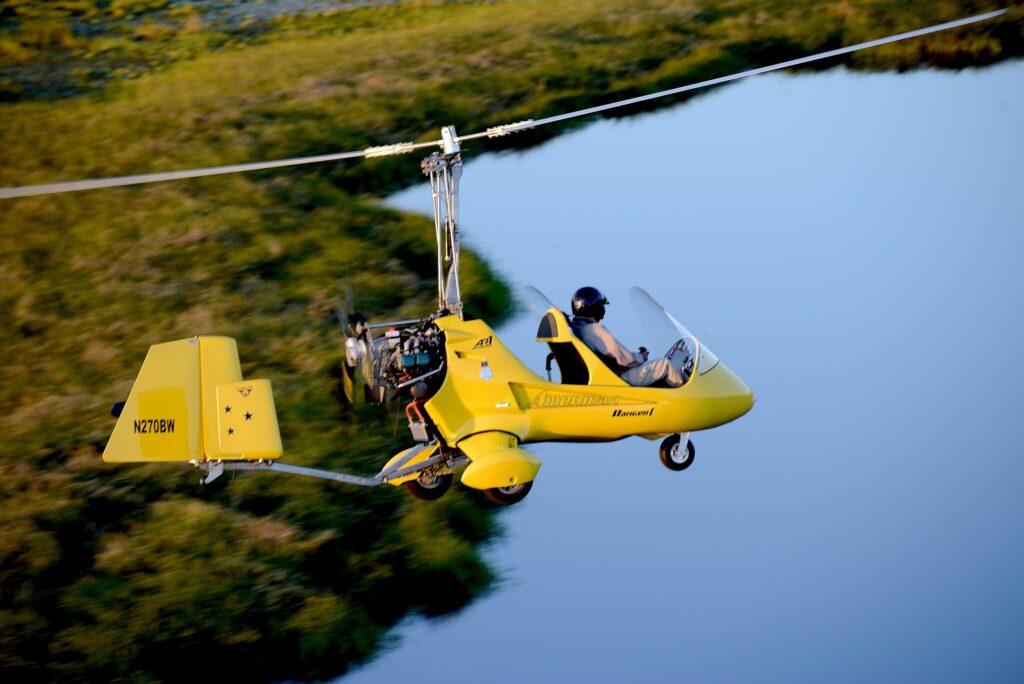
American Ranger 1 (AR-1) Gyroplane. Our award-winning gyroplane is a modern pusher-style design with a high-inertia Stella rotor system and speeds from 25 mph to 110 mph. The AR-1 is now the first production gyroplane with a Gyroplane Warning System (GWS) as standard equipment. It is available with Rotax 912, 914, or 915 engines and can be built with builder’s assist at our Zephyrhills facility.
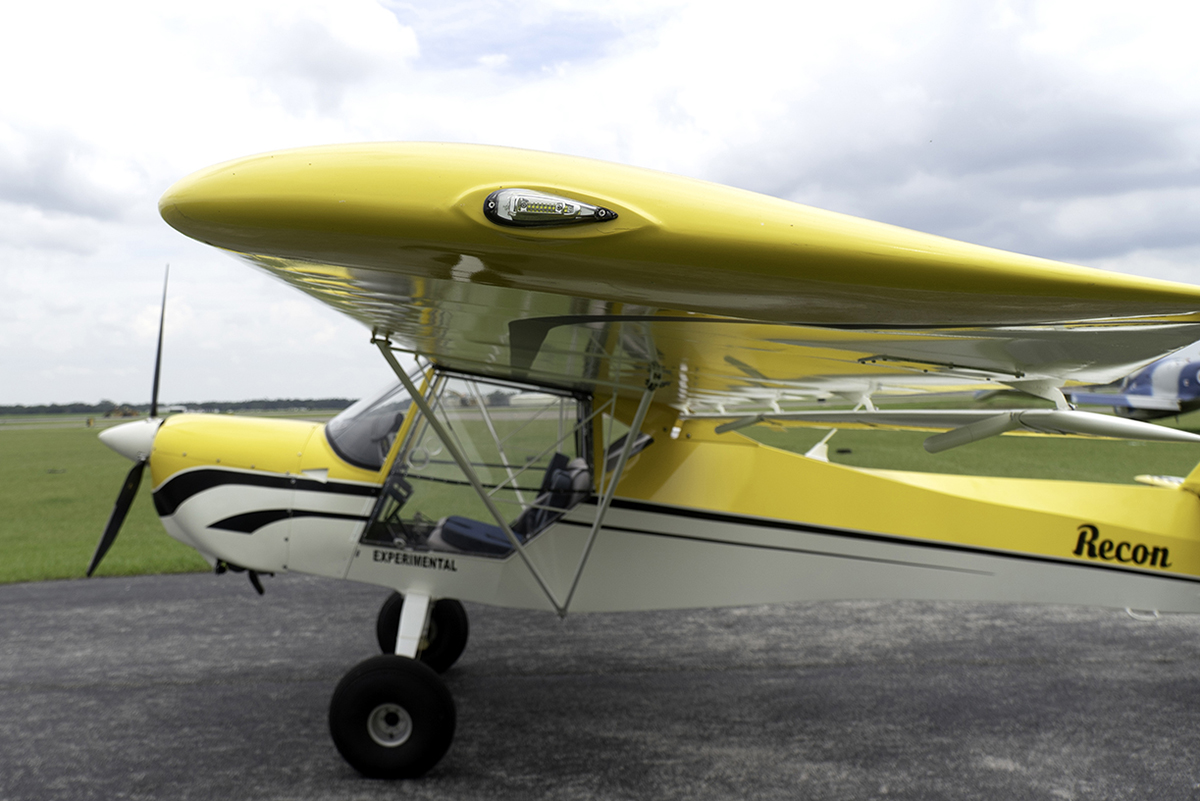
Recon Quick-Build Kit Airplane. A folding high-wing airplane based on the proven Avid Flyer platform. The Recon is available in tailwheel and tri-gear configurations, accommodates Rotax 912, 915, and 916-series engines, and can go from crate to sky in as few as 17 days with our builder’s assist option. Starting at $75,000.
AJ Sport Airplane. We are the exclusive U.S. dealer for the AJ Sport, a modern light sport airplane built on the proven CTLS platform with a 49-inch cabin, dual Dynon HDx glass cockpit screens, and a fuel-efficient Rotax 912iS engine.
All three aircraft are well-suited for pilots exercising sport pilot privileges and comply with ASTM standards governing the light-sport category. View current light sport aircraft pricing here.

Frequently Asked Questions
Can a sport pilot fly any light sport airplane?
A sport pilot can fly aircraft that meet the performance standards under the MOSAIC rule, including a clean stall speed at or below 59 knots CAS. The aircraft must also carry a valid airworthiness certificate. Certain endorsements are required for aircraft with retractable landing gear, constant-speed propellers, or for night operations.
Are type-certificated aircraft the same as light sport aircraft?
No. Type-certificated aircraft hold standard airworthiness certificates issued under the FAA’s original certification process. They are not light sport aircraft and do not become light sport aircraft regardless of who flies them. Under MOSAIC, some type-certificated airplanes may be eligible for sport pilot operation if they meet the stall speed and other performance standards. The aircraft’s certification category does not change; only the pilot privileges that apply to it expand.
What is the difference between an S-LSA and an E-LSA?
A Special Light Sport Aircraft (S-LSA) is a factory-built aircraft manufactured under ASTM standards and sold ready to fly. An Experimental Light Sport Aircraft (E-LSA) is built from a kit airplane. E-LSA owners who complete a Light Sport Repairman inspection course can perform condition inspections on their own aircraft.
Did MOSAIC eliminate the light sport category entirely?
No. MOSAIC expanded and modernized it. The terminology is changing from “light sport aircraft” to “light-sport category aircraft” under new FAA Part 22 regulations. The category becomes effective for new aircraft certifications starting July 24, 2026.
Do gyroplanes qualify as light sport aircraft?
Under the original 2004 rules, sport pilots could fly gyroplanes built as Experimental Amateur-Built aircraft, but there was no S-LSA pathway for factory-built production gyroplanes. That exclusion is corrected by MOSAIC, which creates the first regulatory pathway for certifying production gyroplanes under the new light-sport category rules. For gyroplanes, the original limits of 1,320 pounds gross weight and two seats remain in place. The expanded weight and speed limits under MOSAIC apply to airplanes only. Flying a gyroplane as a sport pilot requires a sport pilot certificate in the rotorcraft-gyroplane category and class. Interested in gyroplane flight training? See our recommended training partners.
Ready to Fly?
Whether you are drawn to the unique experience of gyroplane flight or the versatility of a kit airplane, SilverLight Aviation has an aircraft for you. Our team is based in Zephyrhills, Florida and provides hands-on builder’s assist, technical support, and personalized guidance from inquiry through airworthiness.
We also offer engineering consultancy services for aircraft manufacturers navigating MOSAIC compliance, ASTM standards, and FAA airworthiness certification. If you are a manufacturer looking to take advantage of the new rules, contact us to discuss how we can help.
Contact SilverLight Aviation today: silverlightaviation.com/contact
About the Author
Abid Farooqui
President and Founder, SilverLight Aviation
Abid Farooqui is the President and Founder of SilverLight Aviation, the Zephyrhills, Florida-based manufacturer behind the award-winning American Ranger 1 (AR-1) gyroplane and the Recon quick-build kit airplane. Established in 2012, SilverLight Aviation has grown under Abid’s leadership into one of the most respected names in light sport aircraft manufacturing in the United States.
With over 20 years of experience flying, designing, manufacturing, and supporting light sport aircraft, Abid is a recognized expert in FAA airworthiness certification and ASTM compliance for the light-sport category. He has successfully led compliance processes and FAA audits for multiple aircraft manufacturers, including Progressive Aerodyne (SeaRey amphibian airplane), American Legend Cub (Super Legend), Evolution Trikes, Skyrunner, and Texas Aircraft Colt. Abid has also worked directly with the FAA on the details of the MOSAIC rule, giving him firsthand insight into the regulatory changes reshaping light sport aviation.
Abid’s expertise in the evolving MOSAIC regulatory landscape has led SilverLight Aviation to expand its aviation engineering consultancy services to include MOSAIC compliance guidance for aircraft manufacturers. He is a sought-after voice in the light sport aviation industry on topics including ASTM standards, FAA certification, and the practical implications of the new light-sport category rules for both manufacturers and pilots.
Read more articles by Abid on the SilverLight Aviation blog.