
If you’re a flight school owner or operator, you already know that selecting the right training aircraft is one of the most critical decisions you’ll make for your business. Your choice directly impacts student satisfaction, operational costs, maintenance schedules, insurance rates, and ultimately, your school’s profitability and reputation. With the FAA’s recent MOSAIC rule expanding opportunities for Light Sport Aircraft in professional training environments, now is the perfect time to evaluate whether your fleet is truly optimized for success.
After years of conversations with flight school operators across the country, one pattern has become clear: most schools want an aircraft that students feel confident in from day one. They want modern avionics that prepare pilots for real-world flying, fuel efficiency that doesn’t break the bank, safety features that give both instructors and students peace of mind, and they want a purchase price that makes financial sense when building or expanding a fleet.
The challenge? Finding an aircraft that delivers on all of these requirements without compromise.
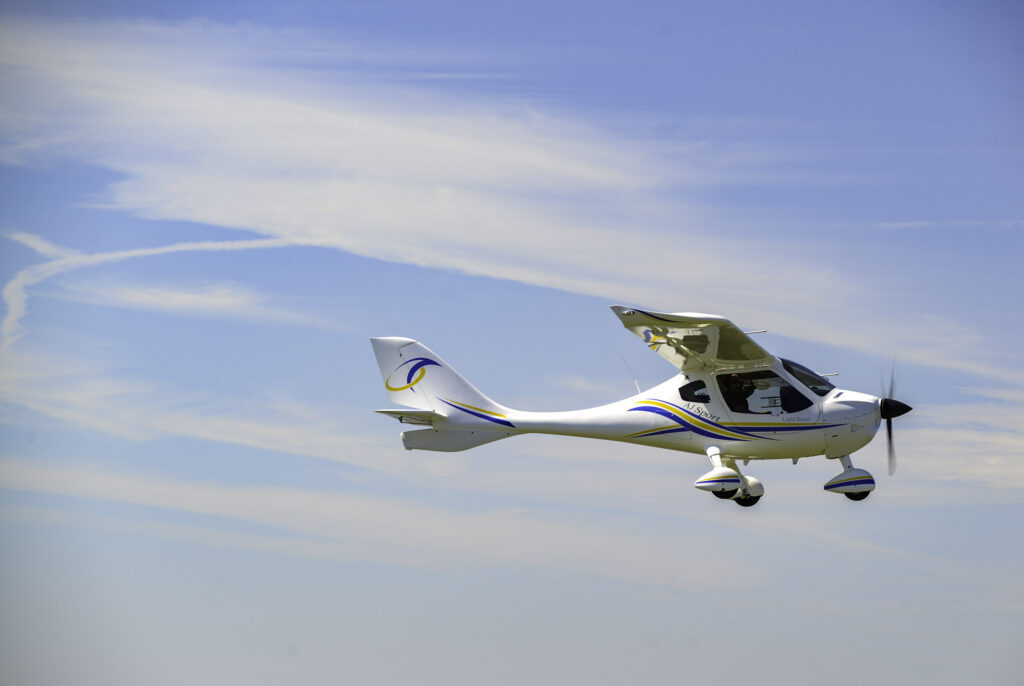
Enter the AJ Sport airplane, now available exclusively through SilverLight Aviation.
Built on a Legacy That Actually Matters
Let’s talk about proven platforms. Some manufacturers tout their “new” designs, but smart flight school operators know that the training environment is no place for unproven technology. Students will test every system, stress every component, and push every limit, often unintentionally. That’s why the AJ Sport’s foundation matters so much.
This aircraft evolved from the CTLS platform originally developed by FlightDesign GmbH, a design that has logged millions of training hours across 40+ countries with over 1,900 pilots. When you purchase an AJ Sport, you’re not gambling on an untested airframe. You’re investing in a platform with two decades of real-world validation, now enhanced with modern features to meet the requirements of American pilots and instructors.
Since 2016, when the design rights and tooling were acquired by AeroJones Aviation, a significant evolution has occurred. The cabin space was expanded for improved student comfort during long training sessions. The fuel system was completely redesigned to eliminate vapor lock issues that plague many trainers in hot climates. A new engine cowling was developed to improve cooling efficiency, critical when you’re running pattern work all day in summer heat. The wingspan was increased with curved winglets for better slow-speed handling, and VGs (vortex generators) were added for lower stall speeds and softer, more controlled landings that protect your investment from student mistakes.
Every change was driven by one question: What do professional training operations actually need? The result is an aircraft that combines time-tested reliability with cutting-edge refinements, exactly what your operation demands.
Safety Features Your Students Will Appreciate
Flight schools operate under intense scrutiny. Every prospective student researching where to pursue their aviation dreams is asking the same question: “How safe is this?” While you know that proper training is the foundation of safety, having the right equipment matters tremendously.
The AJ Sport comes standard with a Carbon-Kevlar Safety Cell protecting the cabin, a feature typically found in far more expensive aircraft. This isn’t marketing language; this is structural engineering designed to protect occupants in the unlikely event of an incident.
Additionally, a full-airframe ballistic parachute system is available for $10,400 (pricing as of January 2026). While some trainers offer this as a costly add-on or omit it entirely, the AJ Sport makes this life-saving technology accessible and affordable. When students are comparing flight schools, “our aircraft have ballistic parachutes” is a powerful statement.
The aircraft’s fuel tanks are strategically located in the wings, away from the fuselage, providing an added layer of protection for you and your students. Combined with the enhanced wing design featuring VGs for docile stall characteristics, the AJ Sport is engineered to be forgiving when students make mistakes.
The Economics Flight Schools Actually Care About
Here’s where the real numbers matter. Let’s be direct about costs, because that’s what keeps your doors open and your schedulers busy.
Acquisition Cost:
As of January 2026, the AJ Sport is priced at $199,000 (or $209,500 with the optional BRS parachute system). (Contact us for current pricing.)
For that price, you receive:
- Dual Dynon HDx 10.4″ screens (not a single small screen, full redundancy)
- Dual ADHRS sensors for backup capability
- Two-axis Dynon Autopilot for instrument training
- Garmin GTR 205 Radio/Com
- PS Engineering intercom
- Garmin Aera 760 backup GPS
Many competing aircraft manufacturers charge $15,000 to $30,000 extra for this level of avionics. With the AJ Sport, it’s included. Even our IFR trainers can be had for a reasonable additional cost. Full Navigator version or just GPS RNAV economy IFR can be added for a reasonable additional cost.
Operating Costs:
The Rotax 912iS Sport engine is the gold standard for LSA efficiency. You’ll cruise at 110 knots at 75% power or dial it back to 100 knots at maximum economy, where you’re burning less than 4 gallons per hour. In a typical training lesson profile, you are likely to see under 3 GPH fuel burn.
Let’s do the math. If you’re running 6 hours of training per day, that’s 18 gallons daily at economy cruise. Even at current fuel prices, your daily fuel cost is manageable compared to the 6-10 GPH burn rates of many competitors. Multiply those savings across a year, across multiple aircraft, and you’re looking at tens of thousands of dollars staying in your operating budget instead of going to the fuel farm.
The 912iS is a proven FADEC (Full Authority Digital Engine Control) powerplant with 2,000-hour TBO intervals. Lower maintenance. Fewer surprises. Predictable operating costs. Insurance actuaries love Rotax engines, which means better rates for you.
Fuel Capacity and Mission Flexibility:
With 34 gallons of usable fuel, you have the freedom to fly over 830 miles non-stop with a 30-minute reserve. For flight schools, this means no cutting discovery flights short due to fuel, genuine cross-country training without anxious fuel stops, the ability to ferry aircraft between locations without logistical headaches, and students who can focus on learning instead of constantly monitoring fuel gauges.
The Student Experience Is Your Competitive Advantage
Your competitors probably have similar aircraft. They probably charge similar rates. So what makes a student choose your school? Increasingly, it’s the quality of the experience, and that starts with the aircraft.
Spacious Comfort:
The AJ Sport features an impressive 49-inch-wide cabin. That’s wider than most LSA trainers on the market. For longer flights, that extra space makes the difference between students arriving fresh and engaged versus cramped and fatigued.
Adjustable seats accommodate students of all sizes without compromise. Your instructors will appreciate this, too. Spending 6+ hours a day in a cramped cockpit leads to instructor burnout and turnover.
Easy Entry Design:
The thoughtfully designed cockpit doors open to allow genuinely easy entry. When a prospective student sits in your aircraft for the first time during an intro flight, that first impression sets the tone. The AJ Sport’s design makes students feel welcomed, not intimidated.
Expansive Visibility:
Expansive windows provide commanding views for takeoff, landing, and those memorable solo flights. For students learning to identify landmarks, scan for traffic, and develop situational awareness, visibility is essential.
Organized Cockpit:
Dedicated storage areas in the cockpit plus two rear luggage compartments mean your aircraft stays clutter-free. Students can bring their kneeboard, logbook, and personal items without creating cockpit chaos. This organizational design reduces distractions and creates a professional training environment.
Modern Avionics That Create Confident Pilots
The AJ Sport’s dual Dynon HDx 10.4″ screens aren’t just impressive, they’re practical training tools. Students learn glass cockpit procedures from day one, developing scan patterns and systems management skills that build genuine proficiency and confidence.
The two-axis autopilot teaches proper automation management, when to engage it, when to hand-fly, and how to monitor systems. Whether students plan to pursue advanced ratings or simply want to enjoy recreational flying with modern equipment, they’ll appreciate learning in an aircraft with contemporary technology.
The Garmin Aera 760 backup GPS provides redundancy and teaches students proper cross-check procedures, building habits that make them safer, more capable pilots.
MOSAIC: The Right Aircraft at the Right Time
The FAA’s Modernization of Special Airworthiness Certification (MOSAIC) rule, which was finalized in 2025, fundamentally changes what’s possible with light sport aircraft. The old 1,320-pound limitation has been replaced with performance-based standards. Aircraft can now have up to 4 seats (though Sport Pilots carry only 1 passenger). Retractable gear, controllable-pitch propellers, and night flight privileges are now accessible with proper training and endorsements.
Here’s why this matters for your flight school: the market for sport pilot training is expanding significantly. Pilots who were previously shut out due to medical certification challenges can now pursue their dreams. Retirees who want to experience the freedom of flight without the hassle of FAA medical exams are discovering sport pilot training. People who simply want to fly for the joy of it now have more accessible pathways. The AJ Sport positions your school at the forefront of this expansion. In addition, it gives you a Technically Advanced Aircraft (TAA) and even IFR trainer package to log time in for your private pilots. We are likely to expand our max gross weight for MOSAIC to give even more useful load.
The aircraft’s clean stall speed falls well within MOSAIC’s 59 KCAS requirement. Its maximum speed is below the 250 KCAS ceiling. It’s fully compliant, fully capable, and ready to help you capture this growing market segment.
While some manufacturers are still figuring out how to adapt their legacy designs to meet MOSAIC standards, the AJ Sport was developed with modern regulations in mind.
Real-World Flight School Performance
Let’s talk about what matters during actual operations. Performance during your busiest months is what pays the bills.
Takeoff Performance:
The AJ Sport clears a 50-foot obstacle in about 1000 feet. For schools operating from smaller airports or dealing with high-density altitude conditions, this performance provides comfortable margins. Your students will develop good habit patterns because they’re not constantly calculating whether they have sufficient runway.
Landing Performance:
Ground roll of 420 feet, with 1,184 feet to clear a 50-foot obstacle on landing. These numbers translate to confidence-building approaches. The AJ Sport’s gentle handling and effective speed control make landing training less stressful for everyone involved.
Cruise Performance:
A max speed (Vh) of 120 knots gives you flexibility. You can cruise efficiently or reposition aircraft quickly when needed. That 830-mile range means genuine cross-country capability without range anxiety.
Payload:
With 500+ pounds of useful payload, you can carry a larger instructor, a larger student, full fuel, and baggage without weight-and-balance gymnastics. The 126.5-pound baggage capacity even accommodates overnight cross-country flights.
Maintenance Reality: What Your Mechanics Will Tell You
Flight school maintenance teams know what matters: parts availability, repair costs, and aircraft that spend more time on the line than in the shop.
The AJ Sport’s Rotax 912iS Sport engine is supported by a mature worldwide supply chain. When you need parts, you can get them. When you need service, there are qualified technicians throughout North America who know these engines inside and out.
The composite airframe design means fewer corrosion worries compared to all-metal aircraft. The simple, proven systems architecture means your mechanics aren’t deciphering exotic engineering. Everything is accessible, documented, and supportable.
This translates directly to dispatch reliability, the metric that determines whether your students can fly their scheduled lessons or whether you’re canceling and refunding. Higher dispatch reliability means happier students, better instructor utilization, and more revenue hours per aircraft.
Why Flight Schools Are Choosing SilverLight Aviation
When you purchase an AJ Sport through SilverLight Aviation, you’re not just buying an airplane. You’re partnering with a company that understands the aviation training business from the inside out.
SilverLight Aviation has been manufacturing and supporting light sport aircraft since 2012. We’re based in Zephyrhills, Florida, with a 12,000 sq. ft. facility and year-round favorable flying weather. Our team includes experienced engineers, pilots, and support staff who have worked directly with flight schools for over two decades.
President Abid Farooqui brings over 20 years of experience in designing, manufacturing, certifying, and supporting light sport aircraft. His resume includes successfully leading compliance processes and FAA audits for multiple aircraft manufacturers. When you have questions, and you will, you’re talking to people who’ve actually done this work, not call center representatives reading from scripts.
As the exclusive U.S. dealer for the AJ Sport, we provide personalized support that’s fast and technical. You’re not just a number among thousands. Your calls get answered by engineers and pilots who know your aircraft intimately and understand the unique demands of flight training operations.
The Investment That Makes Sense
Let’s bring this full circle with the question every flight school operator asks: What’s the return on investment?
At $199,000 (or $209,500 with the optional BRS parachute system, as of January 2026), you’re acquiring a turnkey training platform that includes everything you need to start operations immediately. No surprise costs. No “we should have upgraded to…” regrets. Everything from the dual HDx screens to the autopilot to the backup GPS is included.
Compare this to purchasing a basic trainer from competitors at similar or higher prices, then spending another $20,000 to $30,000 on avionics upgrades, another $10,000 on a parachute system, and another $5,000 on other necessities. Your total investment quickly adds up.
The AJ Sport’s fuel efficiency means you’ll save thousands of dollars annually per aircraft on operating costs. Lower insurance premiums due to its safety features and Rotax engine add up over time. Excellent dispatch reliability means more revenue hours. The impressive cabin space and modern avionics mean higher student satisfaction and better retention: fewer students leaving for “better-equipped” competitors.
Flight schools that invest in quality training platforms see measurable impacts: higher completion rates, better student reviews, easier instructor recruitment (everyone wants to teach in modern aircraft), and stronger financial performance.
Ready to Elevate Your Flight School?
The light sport training aircraft market has never been more dynamic. With MOSAIC opening new opportunities and students seeking modern, safe, efficient aircraft for their training, your choice of training platform has never been more important.
The AJ Sport represents the evolution of the proven CTLS platform, enhanced specifically for flight school operations. From its spacious 49-inch cabin to its dual Dynon HDx avionics suite, from its fuel-sipping 912iS engine to its comprehensive safety features, every aspect of this aircraft was designed with your operation in mind.
We invite you to contact SilverLight Aviation to discuss how the AJ Sport can strengthen your flight school’s training fleet. Whether you’re adding your first LSA, expanding an existing fleet, or replacing aging trainers, we’ll provide a personalized quote and answer your specific questions about operations, support, delivery timelines, and financing options.
Contact us today to receive a personalized quote or schedule a demonstration flight.


